
The U.S. has launched a series of airstrikes on Yemen’s Houthi-controlled regions, marking a dramatic escalation in an already volatile Middle East. The strikes, which left at least 31 dead and nearly 100 wounded, come in response to Houthi attacks on Red Sea shipping. But with Trump vowing more strikes, the real question is: Where does this lead?
This conflict isn’t just about Yemen. It’s a flashpoint in the broader struggle between the U.S., Iran, and their regional allies. And if history is any guide, short-term military actions often spiral into long-term entanglements.
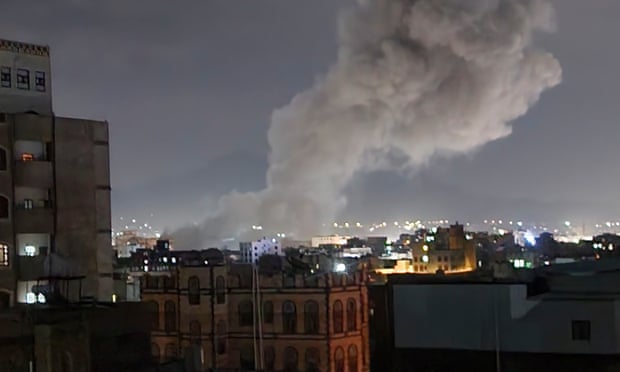
What Sparked the Airstrikes?
The U.S. government justifies its strikes as a defensive response to increasing Houthi aggression against international shipping in the Red Sea. The Houthis claim these attacks are acts of solidarity with Hamas and the Palestinian cause, targeting vessels linked to Israel and its allies.
For the Trump administration, this was a red line. Trump’s threatening rhetoric on social media left no doubt: Washington would act decisively. The strikes, carried out using fighter jets from the USS Harry S. Truman, are meant to weaken the Houthis and send a message to their backers in Tehran.
But is this strategy effective? Or does it risk further destabilizing the region?
Iran’s Role: Proxy War or Independent Actors?
The Houthis are a key player in Iran’s so-called “Axis of Resistance”, a loose coalition of militant groups that includes Hezbollah, Hamas, and Iranian-backed militias in Iraq and Syria. However, Iran insists that the Houthis operate independently—a claim U.S. officials view with skepticism.
Maj. Gen. Hossein Salami, commander of Iran’s Revolutionary Guards, has already warned that Tehran will “respond decisively and destructively” if the U.S. escalates further. Given that Iran has ramped up its uranium enrichment, tensions over its nuclear program are also feeding into the broader conflict.
This brings up a pressing concern: Will these airstrikes push Iran to retaliate, triggering a larger regional war?
Humanitarian Fallout: Who Pays the Price?
Like most conflicts, civilians are the ones bearing the brunt. According to the Houthi-controlled health ministry, a significant number of those killed in the U.S. airstrikes were women and children. The Houthis have already labeled the attacks a “war crime”, vowing retaliation.
Yemen is already facing one of the world’s worst humanitarian crises, with years of war leaving millions on the brink of famine. The U.S. strikes—no matter how precisely targeted—could worsen an already dire situation, fueling anti-American sentiment and potentially strengthening the Houthis’ support among Yemenis.
The question remains: Is this military response worth the potential blowback?
What’s Next? A Cycle of Retaliation?
Trump’s message to the Houthis was clear: “YOUR TIME IS UP.” But history suggests that eliminating an entrenched militant group is easier said than done.
- The Taliban survived two decades of U.S. military action.
- ISIS was declared defeated multiple times, yet continues to resurge.
- Even under relentless Israeli airstrikes, Hamas remains operational.
The Houthis have been fighting since the 1990s and have weathered years of Saudi-led airstrikes. Will U.S. firepower alone change the equation? Or will this simply lead to more attacks on American forces and allies in the region?
Final Thoughts: Is This a War Trump Wants?
As much as these airstrikes are framed as targeted deterrence, they raise a bigger strategic concern—is the U.S. slipping into another long, costly conflict in the Middle East?
With Iran warning of retaliation, the Houthis promising more Red Sea attacks, and regional tensions already at a breaking point, this situation could escalate far beyond its original intent.
For now, the world watches and waits. But if history is any indication, the next move won’t be de-escalation—it’ll be another strike, another retaliation, and another step toward a wider war.