
A fresh team of astronauts has successfully docked at the International Space Station (ISS), marking a crucial crew rotation while paving the way for two long-stranded Starliner astronauts to finally return home.
But behind the excitement of this mission lies a more sobering reality: a spaceflight originally meant to last just eight days turned into a nearly 300-day stay due to technical failures. So, as we celebrate this milestone, we must also ask—what does this mean for the future of space travel?
A Smooth Docking After a Rough Year in Space
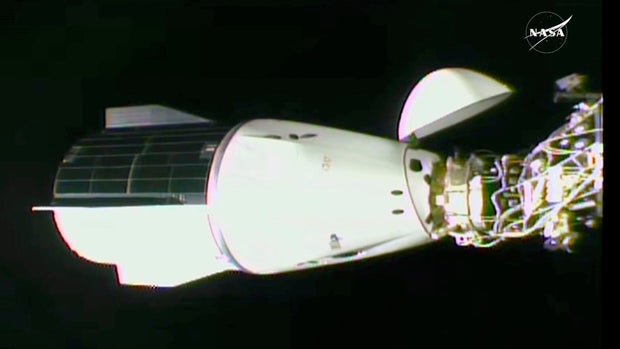
Early Sunday, the Crew 10 Dragon capsule docked with the ISS after a flawless approach, bringing four new astronauts to the orbital outpost. The SpaceX capsule, launched Friday from Kennedy Space Center, executed a precise maneuver before securing itself to the station's Harmony module at 12:04 a.m. EDT.
Among the newcomers is Commander Anne McClain, a former combat helicopter pilot, who described the journey as “absolutely incredible.” Her co-pilot, Nichole Ayers, an Air Force major and F-22 Raptor pilot, echoed the excitement, calling the ride on SpaceX’s Falcon 9 “one of the coolest things” she has ever done.
But while these astronauts are just beginning their six-month mission, two of their predecessors have been waiting almost a year for a ride home.
Starliner’s Troubled Mission: A Cautionary Tale for Spaceflight?
When Barry "Butch" Wilmore and Sunita Williams launched on Boeing’s Starliner spacecraft last June, they expected to stay aboard the ISS for only eight days. But things didn’t go as planned.
Propulsion system failures forced NASA to abandon plans to bring the astronauts home in the Starliner, leaving them stuck in space while the agency worked on an alternative solution. Instead of returning as scheduled, they were absorbed into the Crew 9 rotation and ended up spending nearly 290 days on the ISS.
This ordeal raises serious questions:
- How reliable is Boeing’s Starliner as a commercial crew vehicle?
- Will NASA continue to trust Starliner for future missions, or will SpaceX's Crew Dragon become the preferred choice?
- What impact does an unexpected long-duration stay have on astronauts’ mental and physical health?
While long-term missions are nothing new—astronaut Frank Rubio spent 371 consecutive days in space after a Russian Soyuz spacecraft suffered a coolant leak—missions aren’t supposed to last twice as long as planned.
What Comes Next for the Starliner Astronauts?
With Crew 10 now aboard, Wilmore and Williams are finally set to return next week. But instead of descending in the Starliner, they will ride back to Earth in a SpaceX Crew Dragon capsule, with a planned splashdown in the Gulf of Mexico near Florida.
Once they land, Williams will secure her spot as the second most experienced U.S. astronaut in spaceflight history, with around 570 total days in orbit—just behind Peggy Whitson's record of 675 days.
But prestige aside, the bigger issue is what this means for the future of commercial spaceflight. NASA’s reliance on both SpaceX and Boeing was meant to create redundancy and flexibility, yet Starliner’s persistent problems suggest that SpaceX may be outpacing its competitor.
Final Thoughts: Is Space Travel Ready for the Future?
The success of Crew 10’s arrival shows that SpaceX has firmly established itself as a leader in human spaceflight. Meanwhile, Boeing’s troubled Starliner program has once again raised concerns about the reliability of its spacecraft.
As humanity prepares for ambitious missions—like Artemis lunar landings and Mars exploration—can we afford to have critical failures like this? If commercial spaceflight is truly the future, ensuring reliability and safety must be the top priority.
For now, the return of Wilmore and Williams will be a welcome relief. But the bigger question remains: Can Boeing bounce back, or will NASA be forced to rethink its partnerships for the next era of space travel?