
From “Targeted Operation” to Regional Firestorm
It started as a “limited” campaign. That’s how modern wars often begin — framed as precise, necessary, controlled.
Now, more than 100 people are reportedly dead after a strike on a school in southern Iran. Drones have hit near the US embassy in Riyadh. Explosions echo across Gulf capitals. Airspace closures are stranding thousands.
And leaders on all sides insist this won’t become an endless war.
If that sounds familiar, it should.

The Political Promise: “Not Endless”
Israeli Prime Minister Benjamin Netanyahu says the campaign against Iran could be quick and decisive — not years long.
US President Donald Trump says Washington has the capability to continue operations far beyond the initial four-to-five-week projection. Defense Secretary Pete Hegseth insists, “This is not Iraq.”
But here’s the uncomfortable truth: wars rarely unfold according to political timelines.
Once missiles start crossing borders, control becomes an illusion.
The School Strike: A Human Cost Nobody Can Ignore
Iran claims that more than 100 people were killed when a strike hit a school in Minab. The United States and Israel have not confirmed responsibility. Israel says it’s unaware of such a strike. Washington says it is investigating the reports.
Regardless of attribution, the optics are devastating.
A school. Children. Civilians.
Even if the facts are still being verified, the mere possibility of such casualties shifts the moral ground of the conflict. Military objectives may be debated. Civilian deaths are harder to justify — and impossible to erase.
This is where strategic campaigns collide with human reality.
The Embassy Attack: A Dangerous Threshold


Two drones targeted the US embassy in Riyadh, reportedly causing limited damage. Saudi Arabia confirmed minor material impact and a small fire.
But the symbolism is bigger than the damage.
When embassies are hit — even partially — it signals escalation. Diplomacy becomes secondary. Retaliation logic takes over.
The US has issued shelter-in-place orders in Riyadh and Jeddah. It has urged Americans to leave more than a dozen countries across the region.
That’s not routine precaution. That’s preparation for unpredictability.
The Expanding Battlefield
Explosions have reportedly been heard in Abu Dhabi, Dubai, Doha, Manama, and Kuwait City. Israel has struck targets in Lebanon after Hezbollah attacks. Iran continues targeting Gulf states hosting US bases.
This is no longer a contained US–Israel vs. Iran confrontation.
This is regional spillover.
And history shows that once regional actors are drawn in, disentanglement becomes exponentially harder.
The Illusion of a Clean Conflict
Leaders speak about reshaping the Middle East. About opportunities for peace. About decisive outcomes.
But the region’s past tells a different story.
Conflicts framed as short-term often evolve into drawn-out instability. Iraq. Syria. Yemen. Libya. Each began with confidence. Each spiraled beyond expectations.
The current campaign lacks a clearly articulated endgame. What does “victory” look like? Regime change? Strategic deterrence? Temporary degradation of missile capabilities?
Without clarity, military escalation risks becoming self-perpetuating.
India and the Global Stakes
Narendra Modi has called the escalating conflict a matter of grave concern and emphasized dialogue and diplomacy. That position reflects more than principle — it reflects vulnerability.
India depends heavily on energy flows from the Gulf. So do Europe and large parts of Asia.
When Gulf cities experience missile strikes and shipping lanes face threats, the consequences ripple outward — affecting oil prices, inflation, trade routes, and global markets.
This isn’t just a regional war risk.
It’s an economic one.
Evacuations and Airspace Chaos

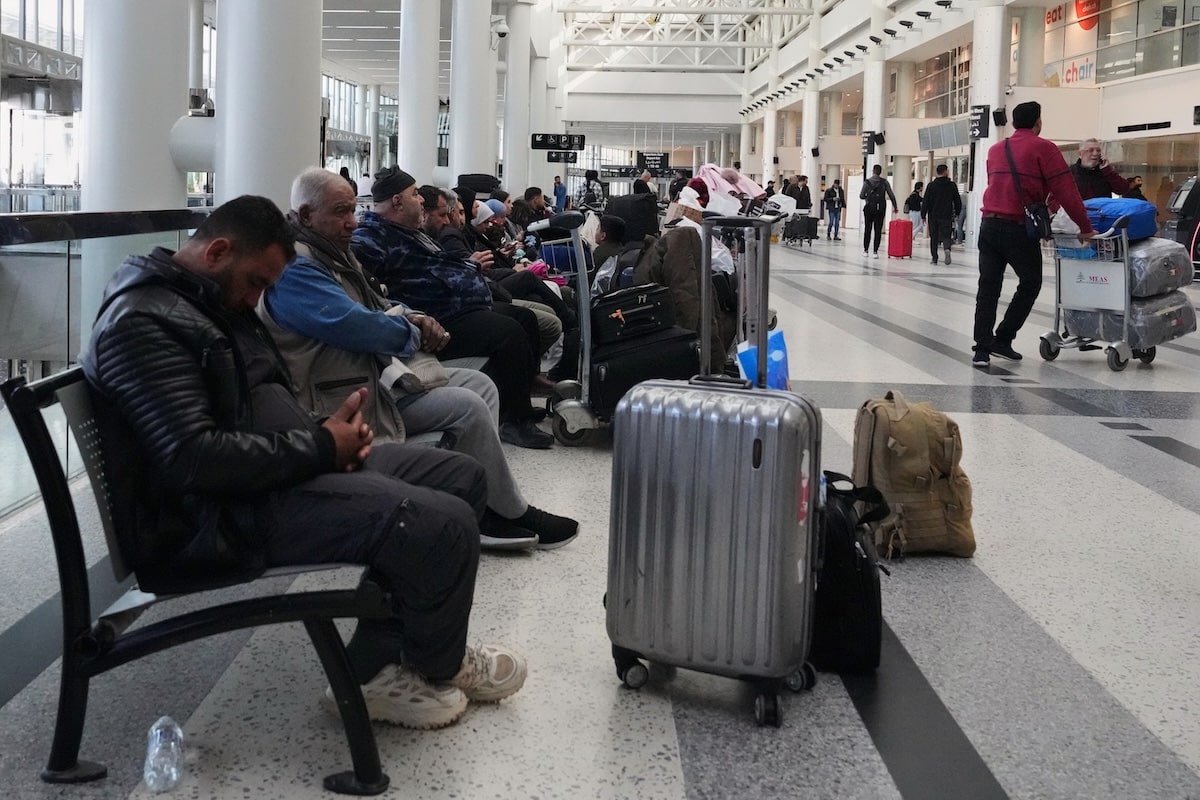

Airspace closures have disrupted travel across the Middle East. While limited evacuation flights have resumed from the UAE, most commercial routes remain suspended.
Thousands of travelers are stranded.
When airports shut down across multiple capitals simultaneously, it signals instability far beyond military targets. It means ordinary life is being disrupted on a massive scale.
And prolonged disruption breeds panic — economically and socially.
The Most Dangerous Variable: Duration
Here’s the core risk: time.
Short wars are politically survivable. Prolonged conflicts reshape entire regions.
President Trump has said the US can sustain operations far longer than initially planned. Netanyahu says it won’t stretch on for years.
But both statements hinge on assumptions — about deterrence, retaliation limits, and strategic restraint.
What if Iran refuses to back down?
What if Hezbollah intensifies attacks?
What if Gulf states are pulled deeper into direct confrontation?
There are too many “what ifs” and not enough clear answers.
Are We Watching Containment — or the Start of Something Bigger?
The scale of exchanges, civilian casualties, embassy strikes, and regional spillover suggests that containment is already fragile.
When embassies are targeted, when schools are hit, when airspace shuts down across multiple nations — the line between controlled operation and regional war becomes dangerously thin.
And once that line disappears, rebuilding stability becomes far more complicated than launching airstrikes.
Final Thought: Power vs. Prudence
Governments often argue that decisive military action prevents larger wars. Sometimes that’s true.
But decisive action without a clearly defined exit strategy can just as easily accelerate escalation.
Right now, the Middle East stands at a crossroads.
One path leads to limited, contained confrontation followed by diplomacy.
The other leads to prolonged regional conflict with global economic fallout.
The troubling part?
The rhetoric suggests confidence.
The facts on the ground suggest volatility.