
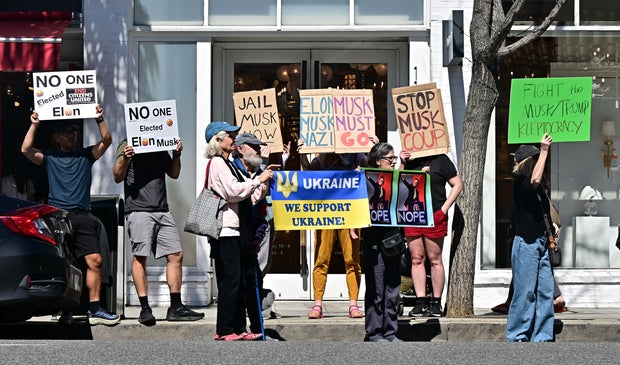
Elon Musk has never been a stranger to controversy, but the recent wave of protests and attacks on Tesla facilities marks an unprecedented backlash against the billionaire. With his deepening involvement in the Trump administration—specifically leading the Department of Government Efficiency (DOGE), responsible for tens of thousands of federal job cuts—Musk has become a central figure in a growing political firestorm.
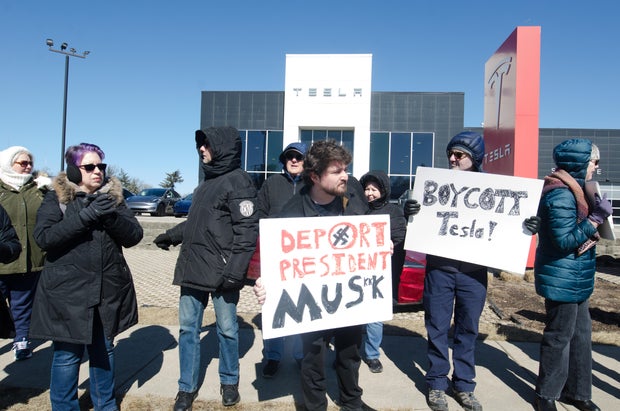
From peaceful demonstrations to violent acts of arson and vandalism, Tesla dealerships and charging stations across the country are now flashpoints in a battle over Musk’s influence on U.S. policy.
A Surge in Tesla-Related Attacks
The timeline of recent Tesla-related violence paints a disturbing picture. While most protests have remained peaceful, several incidents have escalated into outright criminal acts:
- January 29 – February 11: A Tesla dealership in northern Colorado was repeatedly vandalized, with “Nazi” graffiti scrawled on signs and Molotov cocktails thrown onto the lot.
- March 3: Protesters in Maryland defaced a Tesla dealership with anti-Musk graffiti, including a swastika-like symbol.
- March 4: Seven Tesla charging stations in Massachusetts were set on fire.
- March 6: In Portland, Oregon, shots were fired at a Tesla dealership, damaging vehicles and shattering windows.
- March 8: Over 350 demonstrators gathered in New York City for a “Tesla Takedown” protest, leading to multiple arrests.
These attacks reflect a growing frustration with Musk—not just as the CEO of Tesla, but as a political figure with increasing sway over government policy.
Why Is Tesla the Target?
While Tesla has long been a symbol of innovation and the push toward clean energy, it is now entangled in a larger political struggle. The primary driver of the protests appears to be Musk’s leadership of DOGE, the cost-cutting agency responsible for slashing over 62,000 federal jobs. With more cuts looming, particularly in the Department of Veterans Affairs, outrage is mounting.
Additionally, Musk’s controversial remarks in January—where he downplayed historical guilt while speaking at a far-right political event in Germany—fueled accusations that his influence extends beyond business and into shaping a dangerous political ideology.
For many protesters, Tesla is no longer just a car company; it’s a symbol of Musk’s growing political power and the policies they believe are harming everyday Americans.
Is This the Beginning of a Larger Movement?
The scale and intensity of the anti-Tesla protests suggest that this is not a passing moment of outrage. Social media is fueling the movement, with groups like Planet Over Profit rallying activists and calling for direct action against Musk and his companies.
The phrase “This is how we beat fascism”—used in a viral post from a Tesla protest in Manhattan—highlights how deeply political this movement has become. What started as opposition to Musk’s government role has transformed into a broader debate about corporate influence, billionaire power, and the intersection of business and politics.
Musk’s Response: Business as Usual?
Despite the protests, Musk has largely remained silent on the growing unrest. His only notable comment came in response to a video of Tesla vandalism in Massachusetts, where he stated:
“Damaging the property of others, aka vandalism, is not free speech!”
This response does little to address the larger concerns fueling the protests, and his continued silence may only add fuel to the fire.
Tesla itself has not issued an official statement, suggesting that the company is treating the attacks as isolated incidents rather than part of a nationwide backlash. Whether this strategy will hold remains to be seen.
What Happens Next?
With more job cuts on the horizon and anti-Tesla sentiment growing, it’s unlikely these protests will fade away anytime soon. The question now is whether the demonstrations will remain a mix of peaceful protests and sporadic vandalism, or if the movement will escalate into something even more disruptive.
One thing is certain: Tesla is no longer just a car company, and Musk is no longer just a tech mogul. As his political influence grows, so does the resistance against him. Whether this backlash will impact Tesla’s brand or sales remains to be seen—but the battle lines have been drawn, and neither side is backing down.