
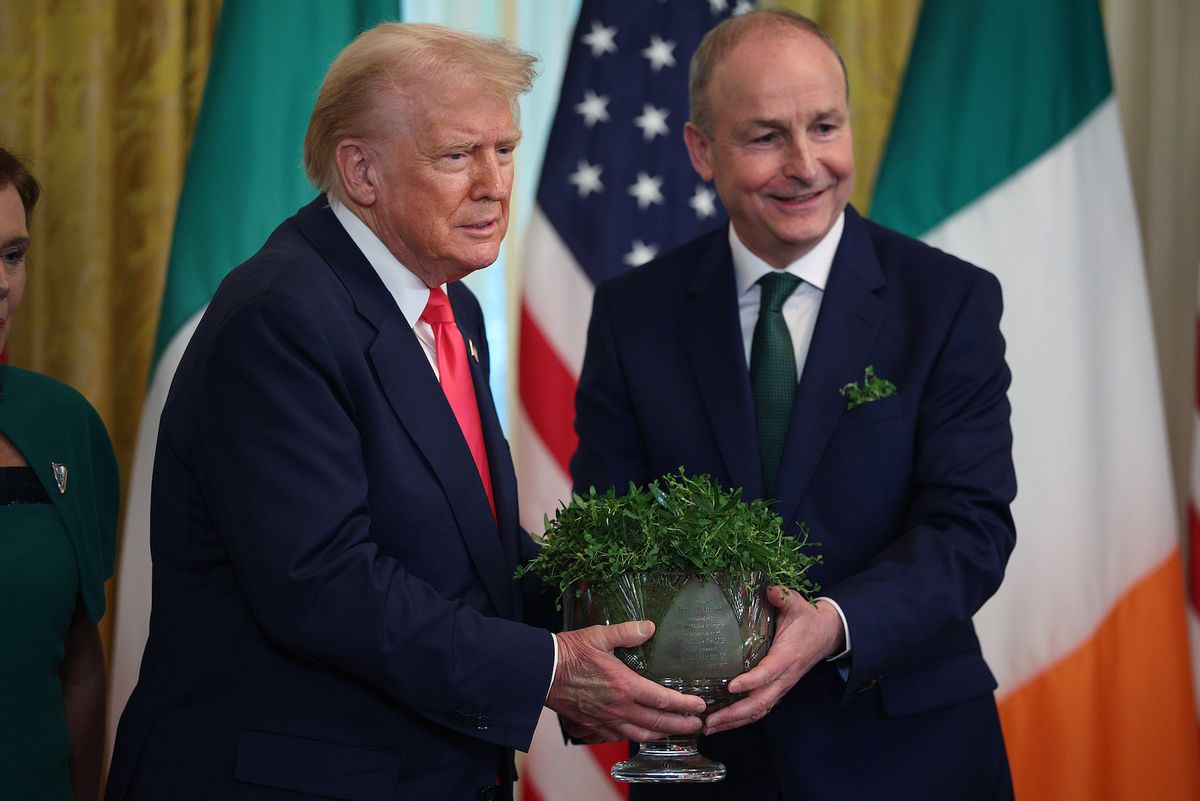
The annual St. Patrick’s Day visit between the Irish Taoiseach and the U.S. President is usually a smooth, ceremonial affair. But when it involves Donald Trump, things are never that simple. As Ireland’s leader, Micheál Martin, endured his obligatory White House appearance, one question loomed large: Does Ireland really have a choice in this so-called special relationship?
The Irish-American Bond: Reality vs. Myth
For decades, Ireland has enjoyed a unique status in U.S. political culture. From the waves of Irish immigrants in the 19th century to the disproportionate number of Irish-American politicians (think: the Kennedys, Joe Biden, and even Trump’s former cabinet), the bond between the two nations is undeniable. But this bond is built on more than ancestry—it’s also deeply economic.
Ireland’s economy is heavily reliant on American tech and pharmaceutical giants setting up shop on its shores, and any disruption to that arrangement could spell trouble. Unlike major European powers such as Germany or France, Ireland can’t afford to antagonize the United States—especially under Trump’s volatile leadership.
Trump’s ‘Affection’ for Ireland: A One-Sided Affair
During his meeting with Martin, Trump gushed about his love for Ireland. But what does that love actually mean? The president was quick to praise Ireland’s beauty, its golf courses (particularly the one he owns in County Clare), and its whiskey. Yet, beneath the surface, his administration’s policies tell a different story.
Just minutes after Martin’s departure, Trump announced a 200% tariff on alcoholic beverages from the EU—an economic gut-punch for Ireland’s booming whiskey and beer industries. It’s clear that Trump’s supposed fondness for Ireland is selective at best and strategically manipulative at worst.
The ‘Special Relationship’ or a Colonial Hangover?
Ireland’s relationship with the United States is often painted as a friendly, mutually beneficial partnership. But is it really? The uncomfortable truth is that Ireland occupies a space somewhere between an independent European nation and a U.S. client state. Its low corporate tax rate makes it an attractive destination for American businesses, but it also leaves Ireland vulnerable to economic strong-arming from Washington.
Trump’s unpredictable trade policies underscore the precariousness of this position. If Ireland pushes back too hard, it risks losing billions in foreign direct investment. If it doesn’t push back at all, it remains at the mercy of a superpower that treats it as an economic pawn.
The Irish Dilemma: To Resist or To Play Along?
Martin’s White House visit was a diplomatic tightrope walk. He played the part well—engaging in just enough "plámásing" (an Irish term for excessive flattery) to keep Trump happy, while carefully sidestepping awkward topics like U.S. tariffs and American isolationism.
Back home, however, Martin’s critics weren’t impressed. Opposition politicians blasted him for laughing at Trump’s offhand joke about Ireland’s housing crisis. Others called his performance "pathetic," accusing him of failing to stand up for Ireland’s interests.
But what real options did he have? Ireland may have cultural power on the world stage, but it lacks the economic or military clout to challenge the United States directly. The country’s best hope lies in playing its cards wisely—leveraging its EU membership and diplomatic ties to maintain its interests without provoking Washington’s wrath.
Trump’s Ireland: A Convenient Fantasy
Perhaps the most revealing moment of the visit came when Trump was asked to name his favorite Irish person. After a moment of visible confusion—perhaps cycling through a mental list that included Pierce Brosnan, Samuel Beckett, and the Lucky Charms leprechaun—he settled on Conor McGregor. That would be the same McGregor recently found liable for sexual assault in a civil trial. A telling choice.
Trump’s perception of Ireland is shaped not by reality but by a romanticized, cartoonish image—a land of charming, white, English-speaking people who make great whiskey and tell funny stories. That perception ignores Ireland’s complex history, its evolving political landscape, and its deep ties to both the EU and the global economy.
Final Thoughts: Ireland’s Next Move in a Shifting Global Landscape
Micheál Martin left the White House believing he had survived the encounter. But survival is hardly a victory when dealing with Trump. The broader question remains: How does Ireland navigate a world where economic dependence on the U.S. is both a strength and a liability?
As the geopolitical landscape shifts and populist leaders like Trump continue to rise, small nations like Ireland will need to find ways to assert their independence without sacrificing their economic stability. Whether Ireland can do that while still playing the "special relationship" card remains to be seen. But one thing is clear: The days of easy diplomacy are over.