
The holiday season, a time traditionally marked by warmth and genuine connection, took an unsettling turn on social media when an AI-generated Christmas card featuring edited images of Prince Archie and Princess Lilibet went viral. Crafted and circulated by a royal fan, this digital creation drew widespread criticism, sparking debate about authenticity, ethics, and the impact of AI on personal and public narratives.
The Backlash: More Than Just “Pathetic Fakery”
The card, surrounded by festive imagery, portrayed a seemingly heartwarming moment of the Sussex children standing side by side in a monochrome portrait. However, it quickly unraveled under scrutiny. Observant netizens were quick to identify discrepancies in the images, pointing out the telltale signs of AI manipulation. Accusations of "pathetic fakery" and "creepy AI edits" dominated comment sections, with many questioning the motivations behind such a fabrication.
Critics labeled it as a glaring example of how technology can be weaponized to mislead and manipulate. "This is a teachable moment," one user aptly commented, "a reminder not to believe everything on social media, especially if it caters to your confirmation bias."
The Ethical Quagmire of AI Manipulation
The Sussex Squad's alleged intent to portray a narrative of familial unity raises critical questions about the ethical boundaries of AI usage. When does creativity cross the line into deception? And more importantly, why is there a need to fabricate such imagery in the first place?
The growing accessibility of AI tools has blurred the line between reality and fiction, enabling anyone to create lifelike images or scenarios with minimal effort. While technology holds immense potential for innovation, its misuse in cases like these underscores the dangers of eroding trust in what we see online.
A Reflection of the Sussexes' Polarizing Legacy
This incident also sheds light on the contentious relationship between Harry and Meghan's supporters and detractors. The fabricated card, albeit crafted by a fan, reflects a deeper societal obsession with controlling public narratives. For the Sussex Squad, it might have been an attempt to counteract criticism or fill the void left by the couple’s decision to maintain privacy for their children.
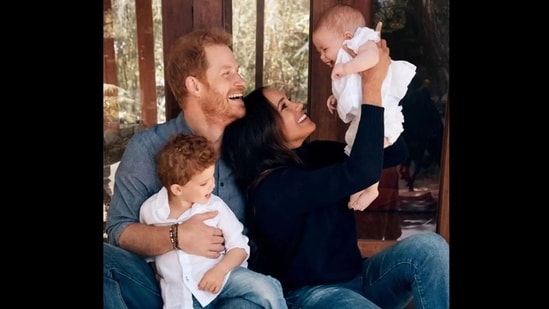
Yet, actions like these often backfire, adding fuel to the fire of controversy surrounding the Sussexes. Even as the couple released an authentic Christmas card featuring genuine moments with their children, the fabricated version overshadowed the heartfelt message, illustrating the enduring power of scandal over sincerity in the public eye.
The Bigger Picture: Social Media’s Role in Fostering Misinformation
This episode isn’t just about one AI-generated card; it’s emblematic of a broader problem plaguing the digital age. Social media platforms thrive on virality, often amplifying content that provokes outrage or admiration, regardless of its authenticity.
AI, while a marvel of modern innovation, has become a double-edged sword. When wielded irresponsibly, it can distort reality and perpetuate falsehoods, further polarizing communities already divided by personal beliefs and biases.
Conclusion: The Need for Digital Discernment
As the lines between real and fabricated blur, it’s imperative for individuals to approach online content with critical eyes and a discerning mind. This incident serves as a stark reminder that not everything online is as it seems, and the consequences of spreading misinformation can ripple far beyond the digital sphere.
While the Sussex Squad’s intentions might have been well-meaning, their actions have inadvertently highlighted the pitfalls of our tech-driven world. As we step into a new year, perhaps it’s time to embrace authenticity over artifice, both online and off.