
The Unstoppable Fury of Nature: 42 Dead, Thousands Affected
The weekend’s severe storms and tornado outbreaks have left a trail of destruction across the Midwest and South, claiming at least 42 lives and displacing countless families. As the nation grapples with the aftermath, a troubling question arises: Are we doing enough to mitigate the growing impact of extreme weather events?
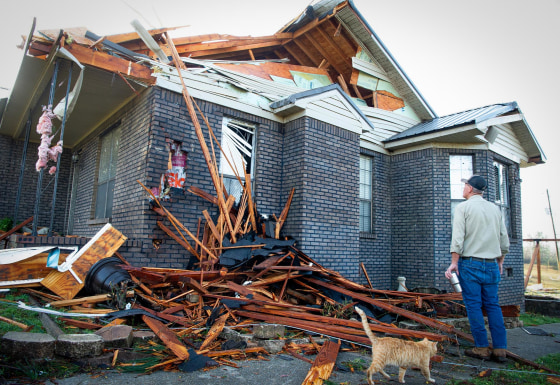
The Devastation Unfolds: A Nation Shaken
From North Carolina to Missouri, powerful tornadoes, wildfires, and dust storms wreaked havoc. Families mourn their loved ones, with heartbreaking tragedies like the loss of two young boys in Transylvania County, North Carolina, after a tree crashed through their home. Meanwhile, power outages left more than 120,000 customers in the dark, and destroyed infrastructure has left communities reeling.
Is this just another isolated weather disaster, or are we seeing a pattern of escalating climate crises?
The Worst of the Storms: A Warning Ignored?
Meteorologists confirm that over 1,500 storm reports flooded in from Friday to Sunday, with some tornadoes reaching EF-4 strength, boasting winds up to 190 mph. A school bus was hurled onto a high school roof in Alabama, and entire towns were torn apart. This isn’t the first time a storm of this magnitude has devastated the country—but why do these disasters seem to be increasing in frequency and intensity?
Despite advancements in weather forecasting, why are we still unprepared for such catastrophic events?
The Climate Crisis: A Wake-Up Call
Wildfires in Texas and Oklahoma claimed additional lives, while a dust storm in Kansas caused a deadly highway pile-up. As climate change accelerates, extreme weather events are becoming more common, yet policies addressing disaster preparedness and climate resilience remain inadequate.
According to climate experts, warming ocean temperatures and shifting atmospheric patterns are fueling stronger and more erratic storms. Yet, funding for disaster relief and infrastructure resilience continues to be a contentious issue in Washington.
How many more lives must be lost before climate resilience is taken seriously?
The Government’s Response: Too Little, Too Late?
Federal and state agencies mobilized emergency response teams, but is reactive aid enough? Communities are left to pick up the pieces with limited resources, and recovery efforts often lag behind the urgency of the situation. Critics argue that instead of addressing the root cause—climate change—the government continues to treat disasters as unpredictable anomalies.
Should disaster preparedness be a priority, rather than an afterthought?
A Call for Action: What Needs to Change?
The increasing frequency of severe storms should serve as a wake-up call for policymakers, emergency response agencies, and the public. Solutions include:
- Strengthening Infrastructure: More resilient homes, power grids, and emergency shelters.
- Investment in Early Warning Systems: Advanced technology can save lives with better forecasting and communication.
- Stronger Climate Policies: Cutting emissions and investing in sustainability to curb extreme weather acceleration.
- Community Education: Teaching disaster preparedness in schools and local organizations.
Conclusion: A Future of More Storms or More Solutions?
As millions recover from this latest disaster, the reality is clear—this won’t be the last. The U.S. must make a choice: continue treating climate disasters as isolated tragedies or take proactive steps to prevent future loss of life and property.
The question remains: How many more tragedies must unfold before real change happens?