
The AI Dilemma: A Boon or a Crutch for Gen Alpha?
With artificial intelligence advancing at breakneck speed, parents are facing a new question: Should they be actively teaching their children how to use AI tools like ChatGPT and DALL-E? Some, like Vanderbilt professor Jules White, see AI as an essential skill—one that could make or break their child’s future success. Others fear it could stifle creativity, critical thinking, and even human relationships.
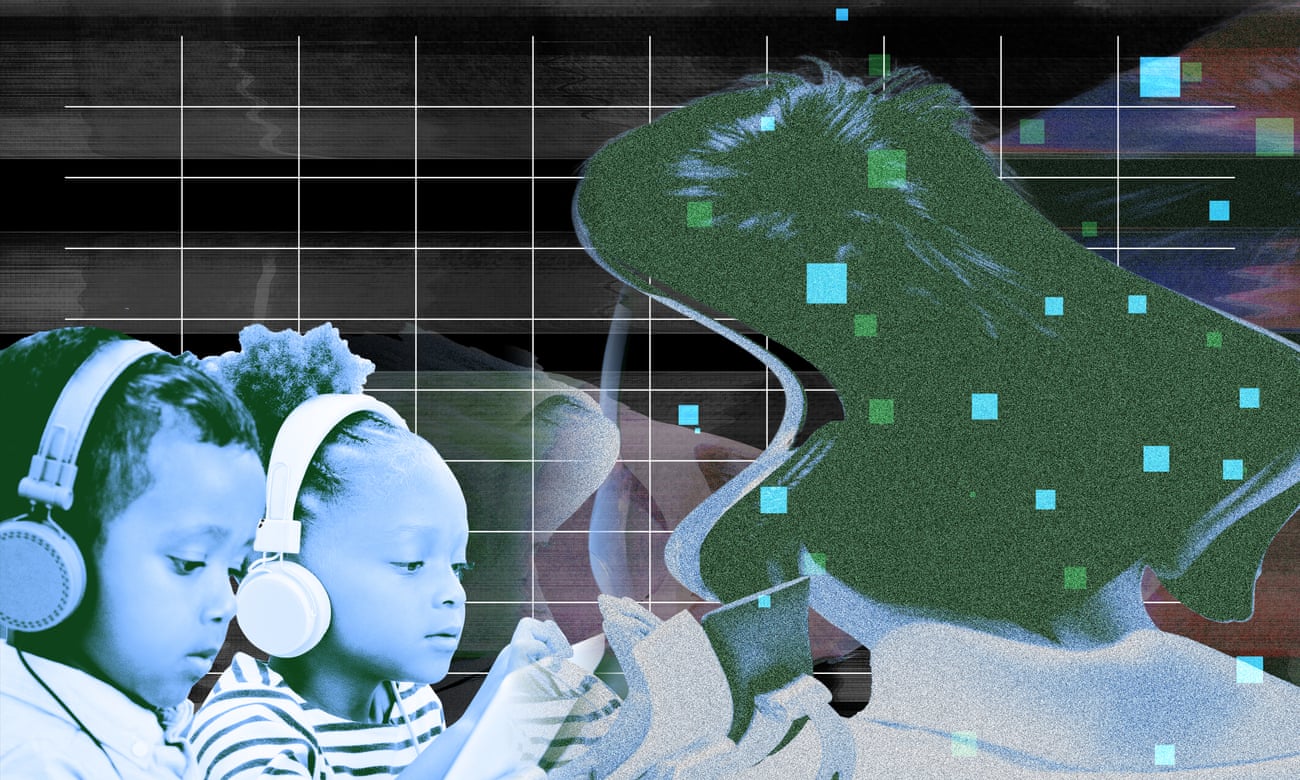
As more parents introduce their Gen Alpha kids to AI, the debate over its long-term impact grows more complex. Are we truly preparing children for the future, or are we creating a generation that is dangerously reliant on machines for everything—from learning to emotional validation?
Teaching AI or Encouraging Intellectual Laziness?
Many parents believe that early exposure to AI will equip their children with critical 21st-century skills. Structured exercises, such as rewriting song lyrics from a squirrel’s perspective or creating AI-generated study guides, are touted as creative ways to engage young minds. But at what point does AI-enhanced learning become AI-dependent thinking?
AI consultant Ola Handford, for example, uses ChatGPT in her home as a tool for sparking curiosity. However, experts warn that unchecked AI use could lead to “intellectual laziness,” where children rely on AI-generated answers instead of forming their own. If a chatbot can summarize a book, write an essay, or solve a math problem in seconds, will kids even bother to think critically anymore?
The issue isn’t just AI use—it’s AI misuse. Without clear boundaries, children may start seeing AI not as a tool, but as a shortcut, undermining the very cognitive skills parents hope to develop.
AI as a Parent, Therapist, and Best Friend? The Risks of Overreliance
Some parents are already using AI as a mediator in emotional conversations with their children. Kunal Dalal, an AI administrator, has developed what he calls a “triangle of communication” with his four-year-old son—using ChatGPT to navigate tough conversations.
While this might seem innovative, it raises an unsettling question: Should children be turning to AI for emotional validation? Harvard professor Ying Xu warns that AI’s growing presence in kids’ lives could erode trust between parents and children. If children start seeing AI as the ultimate source of knowledge, will they still turn to their parents for advice, guidance, or comfort?
The rise of AI “companions” further complicates the picture. While some parents introduce AI avatars to demonstrate their artificial nature, the lines between real and synthetic relationships are already blurring. If a child regularly interacts with an AI friend, will they struggle to form real human connections later?
A Digital Divide: Are We Leaving Less Tech-Savvy Families Behind?
Not all parents are equally equipped to guide their children through AI’s complexities. A 2023 National Parents Union poll found that only 16% of parents with school-aged children truly understand AI’s capabilities. That means the majority of parents are either playing catch-up—or completely unaware of how much AI their kids are using.
This knowledge gap could create a new form of digital inequality, where children from tech-savvy families gain an AI advantage, while others are left behind. And with AI’s rapid evolution, even today’s well-informed parents may struggle to keep up in the future.
The Future of Parenting in an AI-Driven World
The push to teach kids AI is not inherently wrong, but it requires a delicate balance. The difference between a child who uses AI to enhance creativity and one who uses it as a crutch lies in how parents set boundaries and expectations.
Instead of handing AI to children as an all-knowing oracle, parents should emphasize its limitations—teaching them to question, fact-check, and critically assess AI-generated information. More importantly, they must ensure AI supplements, rather than replaces, real human experiences and learning.
As we enter this AI-driven era, one thing is clear: the real challenge isn’t just teaching children how to use AI—it’s teaching them when not to.