
A Political Earthquake in Ottawa
Mark Carney’s ascent to Canada’s highest office is nothing short of stunning. A former central banker with no elected experience, he now finds himself at the helm of a country locked in a heated trade war with Donald Trump’s United States. His defiant declaration—“We will never, in any shape or form, be part of the US”—may have played well to Canadian pride, but does his leadership actually offer a viable path forward? Or is this just another case of political desperation wrapped in patriotic rhetoric?
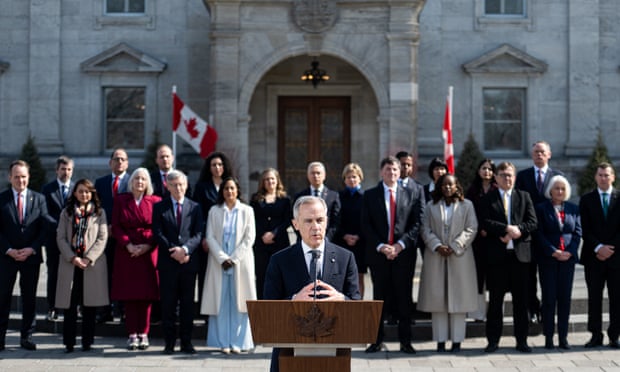
No Seat, No Mandate, No Experience
One of the most glaring issues with Carney’s rise is his complete lack of electoral experience. He has never held a seat in the House of Commons, making him one of the rare prime ministers in Canadian history to govern without the direct backing of voters. While his credentials as the former governor of the Bank of Canada and Bank of England make him a financial expert, politics is an entirely different beast.
His immediate challenge? Calling an election—an inevitable move given that he cannot even attend parliamentary sessions. The urgency of Canada’s economic crisis makes this election a high-stakes gamble, one that could backfire spectacularly.
Trump’s Trade War: The Real Battle
While Carney’s political credentials are questionable, the economic war with the U.S. is very real. Trump’s tariffs and economic policies have thrown Canada’s fragile economy into turmoil, with analysts warning of a potential recession if the conflict drags on.
Despite his tough talk, Carney’s real challenge will be finding a way to de-escalate the tensions. His "we expect respect" stance towards the U.S. is more wishful thinking than strategy—Trump has never been known for diplomatic subtleties. And with U.S. Secretary of State Marco Rubio openly suggesting that Canada would be better off as America’s 51st state, the rhetoric is only getting more extreme.
So what’s Carney’s actual plan? Or does he think bold speeches will be enough to outmaneuver a president who thrives on chaos?
Trudeau’s Shadow Still Looms
Carney's rise also raises questions about Justin Trudeau’s legacy and influence. Trudeau, once the face of progressive politics in Canada, had seen his popularity plummet in recent years—only to experience a surprising surge in support during his final weeks as he stood firm against Trump’s aggressive tactics.
Yet Carney has wasted no time purging key Trudeau allies from his cabinet, sending a clear signal that he intends to distance himself from his predecessor. While some familiar faces like Chrystia Freeland remain, Trudeau loyalists like Mark Holland and Marc Miller have been sidelined.
The political shift is undeniable—but will it be enough to hold off a resurgent Conservative Party, which, despite losing ground in recent polls, remains a formidable threat?
Election Gamble: A High-Risk Strategy
Carney’s greatest test will come in the upcoming election, where his party faces a brutal reality:
- The Conservatives still lead the polls, though their advantage has narrowed.
- Canadians are deeply divided on how to handle Trump’s economic aggression.
- Carney’s lack of political experience could make him an easy target.
While some polls suggest Carney is perceived as more competent than Conservative leader Pierre Poilievre, elections aren’t won on perception alone. Canadians will need more than bold speeches and defiant rhetoric—they’ll need an actual strategy to weather the economic storm Trump has unleashed.
The Verdict: A Leader Without a Plan?
Carney’s rise is dramatic, unexpected, and full of contradictions. He talks tough on Trump but has no clear roadmap for dealing with him. He speaks of uniting Canada, yet his own political legitimacy is in question.
Will Canadians buy into his “steady hand in uncertain times” narrative? Or will they see him as an unelected technocrat thrust into power during a crisis with no real mandate?
One thing is certain: Canada’s political and economic future has never been more uncertain. And Mark Carney has little time to prove he’s the leader who can navigate it.