
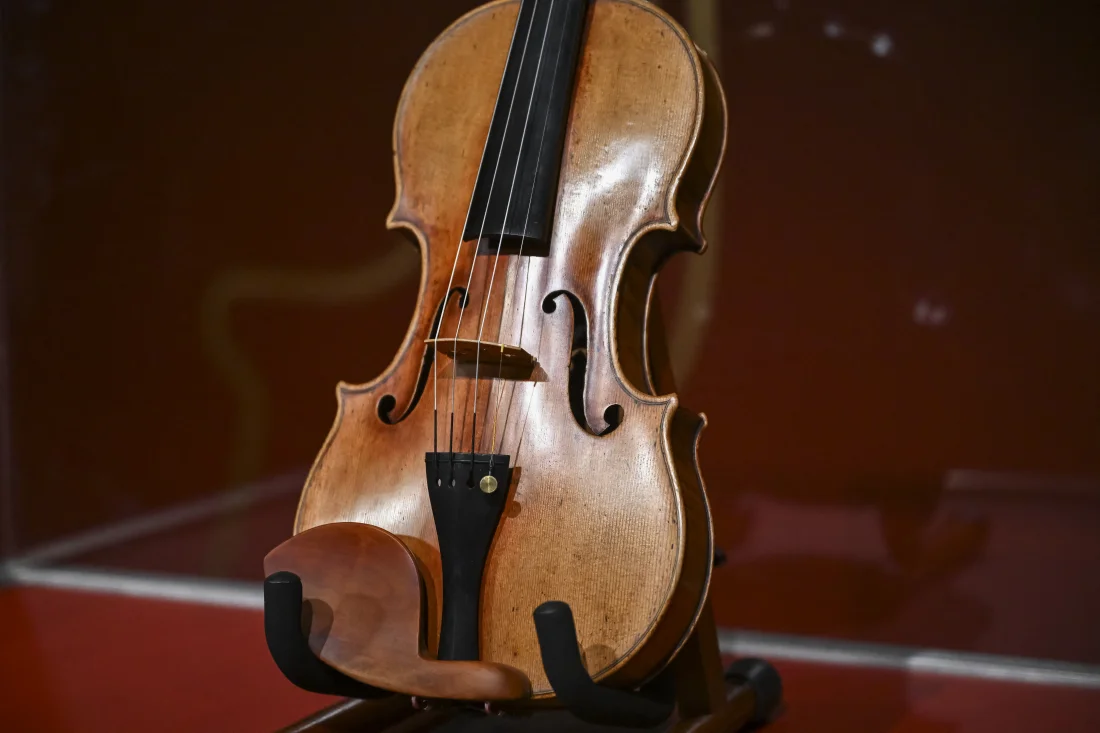
A Stradivarius violin just sold for $11.3 million at Sotheby’s, proving yet again that these legendary instruments remain highly sought after. But here’s the kicker—it didn’t even come close to breaking the record. Despite expectations that the so-called Joachim-Ma Stradivarius would fetch up to $18 million, the bidding stalled at $10 million before auction fees were added.
So, what does this tell us? Are these centuries-old violins truly worth the astronomical price tags, or has the Stradivarius brand become more of a status symbol than a superior musical instrument?
Stradivarius Violins: More Than Just an Instrument?
The Stradivarius name carries an almost mythical weight in the classical music world. Crafted by Antonio Stradivari in the 17th and 18th centuries, these violins are hailed for their exceptional sound quality—though, ironically, science has yet to definitively prove that they’re superior to high-end modern violins.
Still, collectors and musicians alike pay fortunes for them. The Joachim-Ma Stradivarius, built in 1714, was once played by famed 19th-century violinist Joseph Joachim and later owned by Si-Hon Ma. Its rich history no doubt contributed to its multi-million-dollar price. But let’s be real—how much of the value comes from its sound, and how much comes from sheer prestige?
Is the Stradivarius Hype Justified?
Over the years, blind listening tests have repeatedly suggested that many professional musicians can’t consistently distinguish a Stradivarius from a well-made contemporary violin. This raises an uncomfortable question: If the difference isn’t immediately noticeable to the ear, what exactly are people paying for?
In 2011, the "Lady Blunt" Stradivarius sold for $15.9 million, setting the auction record for a musical instrument. That violin had barely been played in 300 years, making it an almost untouched relic. But does rarity alone justify the price?
An Auction Disappointment?
The Joachim-Ma Stradivarius was expected to sell for $12 to $18 million, yet it only reached $11.3 million. While that’s still a staggering amount, the failure to meet expectations suggests that even the most prestigious instruments aren’t immune to market fluctuations.
This begs the question: Are we finally seeing a cooling of the Stradivarius craze? Or did potential buyers simply feel that this particular violin didn’t warrant the upper-end estimates? Either way, the underwhelming final bid is a reminder that even legendary objects have limits.
A Price Tag That Benefits Whom?
While Sotheby’s remains tight-lipped about the buyer, we do know that the proceeds will go toward a scholarship fund at the New England Conservatory. That’s a commendable outcome, but it also highlights another uncomfortable reality: Many Stradivarius violins are no longer in the hands of musicians.
Increasingly, these instruments end up locked away in private collections or institutions, seldom played and instead treated as investments. What good is a world-class violin if it spends more time in a display case than on a concert stage?
The Stradivarius Obsession: A Symbol of Classical Music’s Elitism?
The astronomical prices of Stradivarius violins reflect a broader problem within the classical music world: exclusivity. The idea that only a select few can own, play, or even hear these instruments reinforces a culture that prioritises heritage over innovation.
Modern luthiers are crafting exceptional violins, some of which rival—if not surpass—Stradivarius instruments in quality. But because they lack the historic name, they’re considered lesser. This fixation on legacy over performance raises serious questions about whether classical music is evolving or simply clinging to the past.
The Bottom Line
Yes, Stradivarius violins are historic masterpieces. Yes, they hold sentimental and cultural value. But are they truly worth these exorbitant sums? Or have they become little more than overpriced relics, hoarded by collectors who care more about prestige than sound?
With this latest auction failing to break records, perhaps it’s time for the classical world to reconsider its obsession with these centuries-old violins. After all, music should be about what you hear—not just about the name on the label.