
Japan’s Prime Minister Shigeru Ishiba is putting on a brave face. After his first White House summit with President Donald Trump, he expressed optimism that Japan could dodge the looming threat of higher U.S. tariffs. His reasoning? Japan has invested heavily in the U.S. economy, creating American jobs in the process.
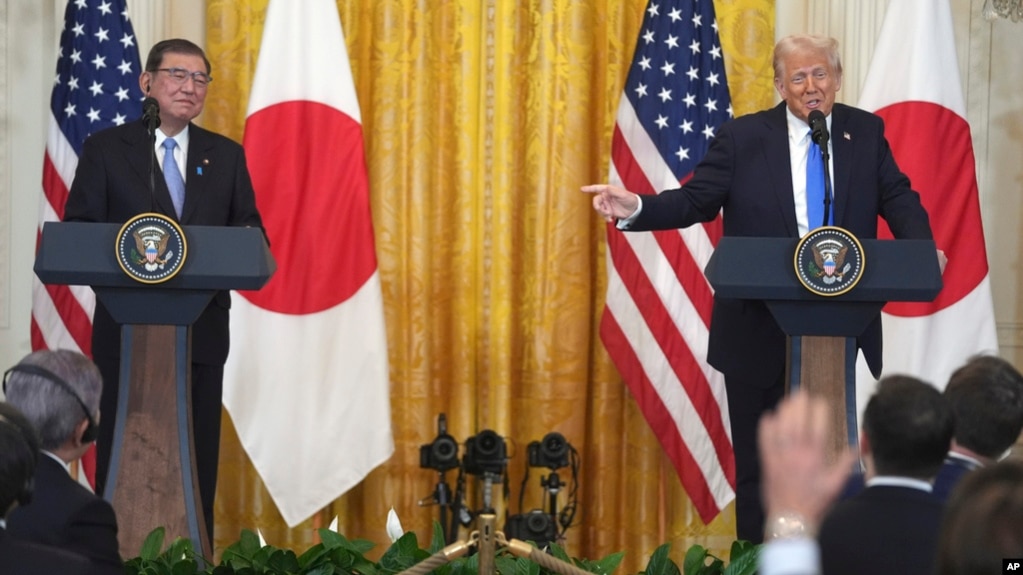
But is this optimism grounded in reality, or is Japan walking into a trade war it refuses to acknowledge? Given Trump’s unpredictable stance on tariffs and his relentless push for a “reciprocal” trade system, Japan’s reliance on goodwill could be a costly miscalculation.
Tariff Talks: A Dangerous Game of Assumptions
One of the biggest red flags from Ishiba’s statement is that auto tariffs were never explicitly discussed during his meeting with Trump. For a country whose economy is deeply tied to its automobile exports, that’s a glaring omission. Trump has already imposed steep tariffs on Canada, Mexico, and China, showing little hesitation in using economic leverage to get what he wants.
Ishiba’s assumption that Japan’s long history of investing in the U.S. will grant it immunity is risky at best. The Trump administration has made it clear that no country is exempt from his aggressive trade policies—why would Japan be any different?
The U.S.-Japan Trade Imbalance: A Thorn in Trump’s Side
Despite Ishiba’s reassurances, the numbers don’t lie. Japan’s $68.5 billion annual trade surplus with the U.S. remains a sore point for Trump, who has repeatedly called for trade imbalances to be eliminated. While Ishiba promised to increase Japanese investment in the U.S. to $1 trillion, there’s no guarantee that will be enough to satisfy Trump’s demands.
Japan’s investment focus—liquefied natural gas, steel, AI, and automobiles—aligns with U.S. interests, but that won’t necessarily shield it from tariffs. Trump has already proven he is willing to disrupt long-standing economic relationships in the name of “America First.”
The Nippon Steel Controversy: A Political Tightrope
Trump’s opposition to Nippon Steel’s attempted purchase of U.S. Steel adds another layer of complexity. Ishiba was quick to reassure that the investment would keep U.S. Steel “an American company” under American management. But that careful diplomatic language won’t necessarily satisfy Trump, who has built his political brand on economic nationalism.
If Trump chooses to block Japanese acquisitions of American companies under the guise of national security or economic independence, Japan could find itself in an even more vulnerable position—losing investment opportunities while still facing the threat of tariffs.
The Military Spending Dilemma: Another Pressure Point
Trade isn’t the only issue at play. Trump has repeatedly demanded that U.S. allies increase their defense budgets, and Japan is no exception. However, Ishiba’s insistence that any increase must have public support suggests hesitation.
Japan is already increasing its military spending due to rising tensions with China and North Korea, but will it be enough to satisfy Trump? If he deems Japan’s efforts insufficient, economic retaliation could follow, adding another layer of pressure on trade negotiations.
A Fragile Optimism That Could Backfire
Ishiba’s public optimism may be a strategic move to project confidence and stability, but the reality is far less certain. Japan may have dodged Trump’s tariff hammer for now, but there is no guarantee that it won’t come crashing down later.
Trump’s trade policies are transactional, not sentimental. He doesn’t care about history—he cares about immediate economic gains and political wins. If Japan continues to assume that its investments in the U.S. will protect it from tariffs, it may soon find itself blindsided by the very trade war it hoped to avoid.