
Amid the ongoing investigation into the catastrophic collision between a Black Hawk military helicopter and a commercial airliner over Washington, D.C., a pivotal question has emerged: Were the Black Hawk crew members utilizing night vision goggles (NVGs) at the time of impact? This inquiry carries significant implications for understanding the situational awareness of the military personnel involved and the broader aviation safety protocols governing nighttime operations.
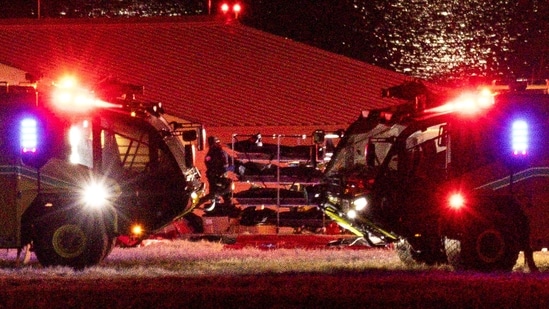
Catastrophic Collision and Its Consequences
On the evening of last Wednesday, a Sikorsky UH-60 Black Hawk, engaged in a scheduled nocturnal training exercise, collided with an American Airlines passenger aircraft. The disaster resulted in the loss of at least 67 lives, rendering it one of the most severe aviation accidents in the United States in recent decades. The incident has prompted intense scrutiny of operational protocols and the circumstances that precipitated such a devastating event.
The Ambiguity Surrounding Night Vision Goggles Utilization
Former U.S. Secretary of Defense Pete Hegseth confirmed that the Black Hawk crew was equipped with night vision goggles. However, he refrained from clarifying whether the devices were actively employed at the moment of impact. This lack of specificity has fueled widespread speculation, necessitating a thorough forensic examination to determine whether the use—or non-use—of NVGs was a contributory factor in the crash.
Forensic Investigation: Analyzing the Evidence
Investigators are meticulously examining the crash site for physical evidence that could confirm the presence or absence of night vision goggles during the incident. According to The New York Times, forensic teams are particularly focused on the spatial positioning of the crew’s helmets and the placement of their equipment. A critical point of interest is the storage compartments designated for NVGs—if these are found empty, it would strongly suggest that the crew had donned the devices at the time of the accident.
Aviation safety experts have underscored the potential forensic markers of NVG use. David Soucie, a former Federal Aviation Administration (FAA) safety inspector, noted that physical trauma to the facial structure could serve as an indicator. “If the goggles were deployed, they would exert force against the skull upon impact, resulting in distinct cranial injuries,” Soucie explained. However, the violent nature of the collision, coupled with submersion in the Potomac River, complicates efforts to extract definitive forensic conclusions.
Transparency Concerns and Theories of Concealment
As the investigation progresses, certain ambiguities in official disclosures have engendered skepticism. The military’s decision to withhold the pilot’s identity has given rise to conjecture regarding possible undisclosed elements of the crash. Some analysts have posited theories suggesting operational failures or systemic lapses, though conclusive evidence substantiating such claims remains absent.
The Path Forward: Investigative and Recovery Efforts
The National Transportation Safety Board (NTSB) has concluded interviews with air traffic control personnel and is now concentrating on the systematic retrieval of wreckage. Authorities estimate that extricating both the Black Hawk helicopter and the commercial aircraft from the crash site will require several days.
As of the latest reports, 55 out of the 67 victims have been formally identified. With ongoing forensic examinations and data analysis, investigators aim to determine whether night vision technology—or its potential misuse—was a decisive factor in this tragic aviation disaster.