
On January 29, 2025, Washington D.C. was shaken by a deadly crash involving an American Airlines flight and a military helicopter. The incident claimed the lives of 67 people, including all passengers aboard the flight and three military personnel. As investigations unfold, one thing becomes glaringly clear—concerns about the region’s airspace congestion are not new, and this tragedy might have been avoidable. But how much longer can the authorities ignore these warnings before another disaster strikes?
The Sky’s Crowded: A Problem Long Ignored
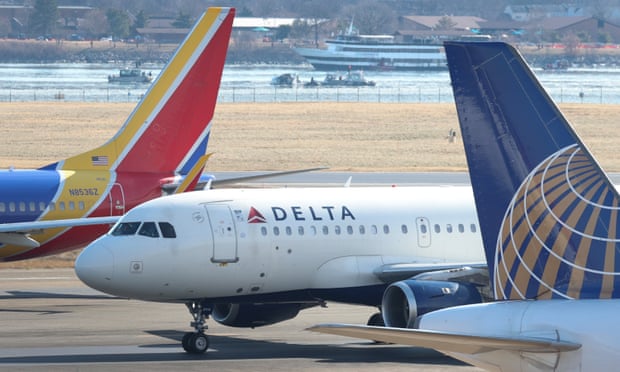
Washington D.C. is home to a uniquely dense airspace, with Reagan National Airport (DCA) at its heart. But it’s not just the commercial planes that fill these skies. Military training flights have been frequenting the area for years, and local residents have been raising alarms for just as long. The D.C. airspace is a busy hub, and experts have long warned that overcrowding could lead to disaster.
Bill Johnson, a Virginia resident, is one such individual who had been sounding the alarm for over a year. Johnson, a commercially certified pilot and retired explosives expert, witnessed more than 20 military helicopters flying over his home in just one hour. While the noise initially annoyed him, it didn’t take long for him to realise that the congestion could be far more dangerous. Johnson went so far as to file complaints with the Federal Aviation Administration (FAA) and military authorities, citing near-collisions and expressing concerns about safety in this already-crowded airspace. Yet, his warnings went largely unheeded.
Military Training Near a Busy Airport: A Recipe for Disaster?
The most glaring issue in this tragedy is the proximity of military training exercises to a busy commercial airport. Daniel Driscoll, nominated to be the Secretary of the Army, called the crash “preventable,” questioning the wisdom of conducting such high-risk operations in the vicinity of one of the busiest airports in the country. Driscoll’s comments are not unfounded—after all, military pilots often operate under different rules and protocols than their commercial counterparts. As Martin Chalk, a former British Airways captain, pointed out, it remains unclear whether air traffic control had fully considered the risk of allowing military helicopters to engage in such training flights so close to DCA.
It’s easy to understand the military’s desire to train pilots in this particular airspace, given its proximity to critical government locations. However, as Driscoll suggests, perhaps there are more appropriate places for these training exercises. Is it really worth the risk to operate military helicopters so close to civilian air traffic, especially when the consequences of failure are so severe?
When Will They Listen? Congress, the FAA, and the Overcrowded Skies
Even before the crash, lawmakers in the region had been expressing concerns about the increasingly crowded skies. Despite their objections, Congress recently approved a bill to add 10 more commercial flights to DCA, despite warnings from Virginia and Maryland senators that the airport’s runways were already operating at maximum capacity. In an ironic twist, just months before the fatal crash, air traffic controllers narrowly avoided a near-miss between two planes at DCA.
So, what does it take for authorities to listen? The fact that lawmakers and citizens alike have been raising these issues for years, only for the situation to escalate into a preventable disaster, is nothing short of frustrating. This crash didn’t happen in isolation—it’s the result of a pattern of negligence that prioritises convenience over safety. As the investigation continues, the question remains: how many more lives must be lost before Washington reconsiders its approach to airspace management?
A Wake-Up Call for Washington D.C.
The fatal crash on January 29 is a stark reminder of the dangers posed by an overcrowded airspace. It’s easy to see how military flights near DCA could be justified, but the public and lawmakers are right to ask: Is it worth the risk? This tragedy was not a freak accident—it was the result of a system that prioritises operational convenience over safety. The question now is whether those in power will finally take action, or whether it will take another avoidable disaster for the lessons to be learned.