
Introduction: When the Black Box Fails to Deliver
In a tragic twist of fate, the black boxes from the Boeing 737-800 crash in South Korea last month failed to record the final four minutes before the disaster. This missing data could have provided vital clues as to what went wrong during the flight that led to the deaths of 179 passengers. As the investigation into the crash continues, this significant gap in critical flight data raises serious questions about the adequacy of modern safety technology and the overall approach to aviation safety.
The Black Box: A Potential Lifeline or a Broken Promise?
Black boxes are meant to be the most reliable tools for reconstructing the final moments of a flight. They record crucial data, such as flight trajectory, altitude, speed, and cockpit conversations—information that can offer answers when tragedy strikes. Yet, in this case, the flight data recorder (FDR) and cockpit voice recorder (CVR) both stopped recording roughly four minutes before the plane crashed. The failure of these devices during such a critical window isn’t just an inconvenience—it’s a major flaw in the investigation process.
While the U.S. National Transportation Safety Board (NTSB) and South Korean authorities are working to piece together the puzzle from other sources, this missing data is irreplaceable. The gap leaves room for uncertainty and speculation about what transpired during those final moments, as we rely on secondary evidence to fill in the blanks.
The Bigger Picture: Shouldn’t We Have Better Systems by Now?
The failure of the black boxes to record the last four minutes isn’t merely a technical hiccup—it’s a wake-up call about the current state of aviation safety systems. Why are we still reliant on technology that can fail in such critical moments? Aviation technology has advanced dramatically over the decades, and yet, we still see significant holes in our safety protocols. The fact that two crucial pieces of technology failed to record vital data isn’t just unfortunate—it’s an indication that, despite all our progress, we still have serious gaps in ensuring complete and continuous safety.
The Impact of the Crash: Safety Failures Beyond the Black Box
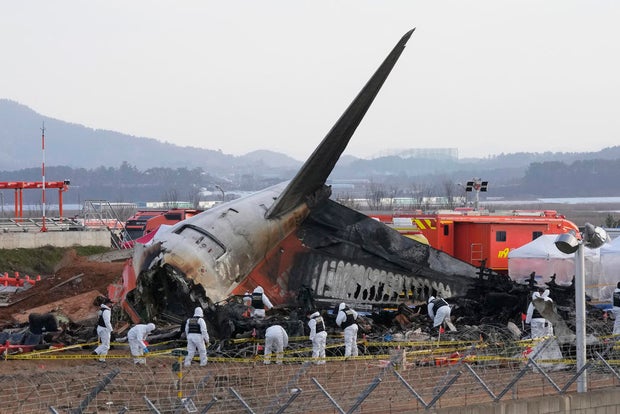
While the missing black box data is a significant setback in understanding the cause of the crash, it’s essential to consider other factors that played a role in the tragedy. The aircraft, operated by Jeju Air, skidded off the runway after its landing gear failed to deploy properly, slamming into a concrete structure and bursting into flames. The failure of the landing gear is a critical piece of the puzzle, and while the missing black box data adds complexity, it’s not the only factor under scrutiny.
Experts have pointed to the localizer system at Muan International Airport as a contributing factor. The structure housing the antennas was constructed with heavy concrete, a material that doesn’t break easily upon impact. If the structure had been built with lighter materials, such as those used in similar systems worldwide, it might have absorbed some of the impact, potentially reducing the severity of the crash.
Investigation and Accountability: A Long Road Ahead
South Korean authorities have promised to improve airport safety and inspect all 737-800 aircraft operated in the country, but is this enough? This crash highlights ongoing flaws in both aircraft maintenance and airport infrastructure. The commitment to improving safety protocols is essential, but it remains to be seen whether these measures will be enough to prevent future tragedies.
As the investigation unfolds, it’s clear that a more proactive and thorough approach to aviation safety is needed. The missing four minutes of black box data are a glaring reminder that safety systems must not only be reliable but also resilient in the face of unexpected challenges. It’s time for the aviation industry to reassess its reliance on outdated technologies and ensure that future investigations—and most importantly, future flights—don’t suffer from the same shortcomings.
Conclusion: A System That Failed When We Needed It Most
The crash of the Jeju Air Boeing 737-800 is a devastating reminder that no system is foolproof. The failure of the black boxes to record the final moments of the flight has made an already tragic event even more challenging to understand. But beyond the missing data, there are broader questions about the reliability of aviation safety systems, airport infrastructure, and the way we approach flight safety investigations. If we want to prevent future crashes, we need to ensure that every piece of technology, every piece of infrastructure, and every investigation method is as thorough and foolproof as possible. Only then can we begin to truly protect lives in the skies.