
As Profits Dry Up, Is the Oil Industry Setting Itself Up for a Future of Oversupply?
The oil market’s recent boom, fuelled by the disruptions caused by Russia’s war in Ukraine, is quickly evaporating—and so are the hefty profits that once flowed into the pockets of giants like Shell and Exxon. As these energy behemoths release their latest earnings reports, we’re seeing signs of a weaker outlook. The war-induced scarcity that once spiked prices has begun to settle, and with that, the oil industry is grappling with the reality that the good times might be over. Meanwhile, former President Donald Trump’s desire to ramp up drilling may only hasten a looming crisis: oversupply.
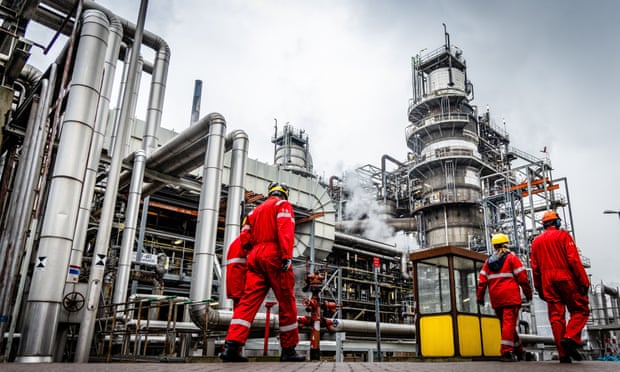
The Decline of War-Fueled Oil Profits: What’s Next for Big Oil?
The war in Ukraine created a perfect storm for oil prices. As global supply chains were disrupted and Russian exports dwindled, oil companies saw an unprecedented spike in prices, reaping massive profits. However, this windfall is starting to fade. Shell and Exxon’s latest earnings reports are expected to reflect this dip, with weaker-than-expected results signalling that the boom days of the past few years are slipping away.
While high prices benefitted oil firms in the short term, the lasting effects of these inflated rates are less certain. Global oil demand has slowed, partly due to economic slowdowns, and the war’s impact on supply chains has stabilised. As a result, the stratospheric profits that once seemed like the new normal for big oil are now turning into distant memories. But as the market cools, the question arises: can oil companies maintain their profitability without the emergency boost of war and conflict?
Trump’s Drilling Agenda: A Recipe for Oversupply?
Enter Donald Trump, who has made no secret of his desire to increase domestic oil production. While the push for more drilling might sound like a quick fix for the struggling oil sector, it risks exacerbating a more significant issue: oversupply.
Trump’s focus on boosting drilling operations across the United States comes at a time when oil markets are already struggling with the balance between supply and demand. The industry is grappling with fluctuating prices, and adding more supply into an already softened market could push prices down even further.
The result? A glut of oil on the market, which could lead to a sharp drop in prices and destabilise the energy sector. Oil companies, already facing weak earnings reports, might struggle to maintain profitability. With the US potentially pumping more oil than the market can absorb, the entire industry could be left with a sinking ship of unprofitable barrels.
Is Oversupply the Next Oil Crisis?
The prospect of oversupply is not just a passing concern; it’s a legitimate threat to the stability of the oil market. In an industry built on scarcity and controlled supply, the introduction of excess production could create a downward spiral for prices. While short-term profits may seem enticing to those pushing for more drilling, the long-term consequences could be disastrous for the market and the environment alike.
The challenge with oversupply is that once it floods the market, it’s difficult to reverse the damage. Oil prices would likely plummet, leading to lower revenues for oil companies, job cuts, and potential bankruptcies. Countries that rely heavily on oil revenues could also face severe economic challenges. The delicate balance between supply and demand would tip, leaving the oil market in a precarious position.
The Environmental Cost: Drilling into the Future
Beyond the economic implications, Trump’s push for more drilling also raises serious environmental concerns. More drilling means more fossil fuels being extracted, which not only exacerbates climate change but also increases the risk of spills, habitat destruction, and other ecological damages. At a time when the world is struggling to curb its carbon emissions, increasing oil production seems counterintuitive at best—and reckless at worst.
Furthermore, the energy market’s focus on increasing supply rather than investing in renewable resources only delays the inevitable shift towards cleaner energy. By doubling down on oil, we risk locking ourselves into a future of dependency on a resource that is becoming increasingly unsustainable, both economically and environmentally.
The Future of Big Oil: A Struggle for Relevance
As Shell, Exxon, and other oil giants face weaker results and the risk of oversupply, the future of the industry appears uncertain. The market dynamics that once favoured big oil are changing, and the companies that have long relied on high prices and scarcity are going to have to adapt.
Oil companies may need to pivot and rethink their strategies, embracing diversification and investment in sustainable energy solutions if they want to stay relevant in an evolving global market. However, as long as short-term profit motives continue to dominate, the industry may find itself trapped in a cycle of boom and bust, with no lasting solutions in sight.
Conclusion: A Critical Crossroads for the Oil Industry
The fading oil boom, compounded by Trump’s call for more drilling, signals a critical crossroads for the industry. The oil market’s reliance on war-fuelled profits is unsustainable, and the push for oversupply could make matters worse. At this juncture, the oil industry faces a choice: continue down a path that leads to oversupply, environmental degradation, and economic instability, or embrace the inevitable transition towards renewable energy before it’s too late.
The oil crisis may be evaporating, but the challenges it has left in its wake are far from over. The question now is whether the industry can adapt to a changing world or risk its own downfall in pursuit of short-term gains.