
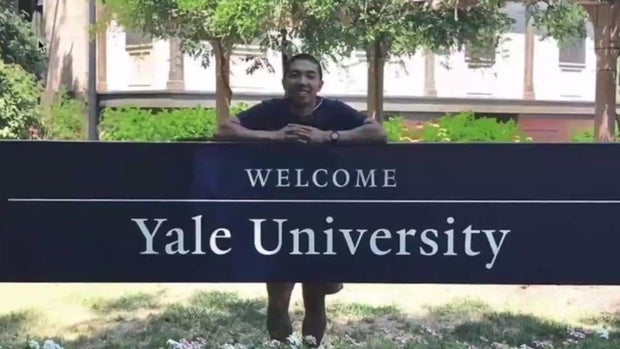
When news of Kevin Jiang's murder broke on February 6, 2021, it seemed like a tragic, senseless act of violence. A bright 26-year-old Yale graduate student and Army veteran, Jiang was shot eight times after what appeared to be a road rage incident. Yet as the investigation unfolded, it revealed a sinister story of obsession, meticulous planning, and a calculated attempt to evade justice—one that reads like the plot of a psychological thriller.
The Illusion of Randomness: A Web of Deception
At first glance, Jiang’s murder was puzzling. A man deeply rooted in faith and service, with no apparent enemies, gunned down after a minor car accident—seemingly a random act. But investigators soon discovered that this was no coincidence. Jiang had unknowingly become the target of a twisted plan devised by an unlikely suspect: Qinxuan Pan, a 29-year-old MIT graduate student specialising in artificial intelligence.
What made this case even more chilling was Pan’s calculated effort to create a smokescreen of randomness. Months before Jiang’s murder, Pan orchestrated a series of shootings in New Haven, Connecticut, firing into homes at random. His intent? To mislead authorities into believing Jiang’s death was just another incident in a pattern of random violence.
It was an intelligent but deeply disturbing strategy, executed with precision that only heightened the sense of dread surrounding the case.
A Tragic Love Story: The Motive Unveiled
The key to understanding the motive behind this crime lay in Jiang’s relationship with Zion Perry, his fiancée. Just a week before the murder, Jiang had proposed to Perry, a Yale PhD student. Their love story, marked by shared faith and a love for nature, seemed like a perfect match.
Unbeknownst to them, Pan had been nursing an obsession with Perry. The two had been mere acquaintances during Perry’s undergraduate years at MIT, their interactions limited to polite exchanges. But for Pan, this minimal connection grew into a dangerous fixation. When Perry announced her engagement on Facebook, it likely triggered a devastating blow to Pan’s delusional fantasies, leading him to target Jiang.
The motive was as unsettling as it was tragic: unrequited infatuation turned into lethal jealousy.
The Hunt for a Genius Fugitive
The investigation into Jiang’s murder was a race against time. Pan, a man of immense intellect, proved to be a resourceful fugitive. After abandoning his SUV—containing crucial evidence like a .45-calibre gun and ammunition—he disappeared into the shadows.
For months, Pan eluded capture, using his technical skills to disable GPS devices and his family’s wealth to fund his flight. His parents, suspected of aiding his escape, were found making suspicious cash withdrawals and travelling across state lines. Yet Pan’s hubris eventually betrayed him. A single phone call by his mother, traced by authorities, led to his arrest in Alabama.
Justice Served? The Lingering Questions
In 2024, Pan pleaded guilty to Jiang’s murder and received a 35-year prison sentence. For many, this felt insufficient given the premeditated nature of the crime and the pain inflicted on Jiang’s loved ones. Perry’s poignant words at the sentencing highlighted this frustration: “Although your sentence is far less than you deserve… may God have mercy on you.”
But the case leaves us with lingering questions. How did Pan’s parents avoid charges despite evidence suggesting they facilitated his escape? What does this say about our justice system's ability to address the role of enablers in such crimes? And most hauntingly, how did a brilliant mind, capable of shaping the future through technology, spiral into such darkness?
The Perils of Genius and Obsession
This case isn’t just a tale of murder; it’s a chilling reminder of the destructive potential of unchecked obsession. Pan’s intelligence allowed him to plot a near-perfect crime, but it also amplified his delusions, leading to devastating consequences.
In a world that often glorifies brilliance, this story forces us to confront its darker side. Intelligence, unmoored from empathy and ethical grounding, can become a weapon of destruction rather than a tool for good.
As we reflect on this tragedy, we are left with a sobering thought: beneath the surface of even the most promising lives, darkness can lurk. And sometimes, it takes the loss of a bright light like Kevin Jiang to remind us of the fragility of our shared humanity.