
The United States government is on the brink of another profound confrontation over the debt ceiling, with Treasury Secretary Janet Yellen issuing a grave warning: absent immediate congressional intervention, the federal government will hit its borrowing limit as early as January 14. Once this threshold is reached, the Treasury will be compelled to employ "extraordinary measures" to avert an unprecedented default on the nation's financial obligations, a scenario fraught with potentially catastrophic economic repercussions.
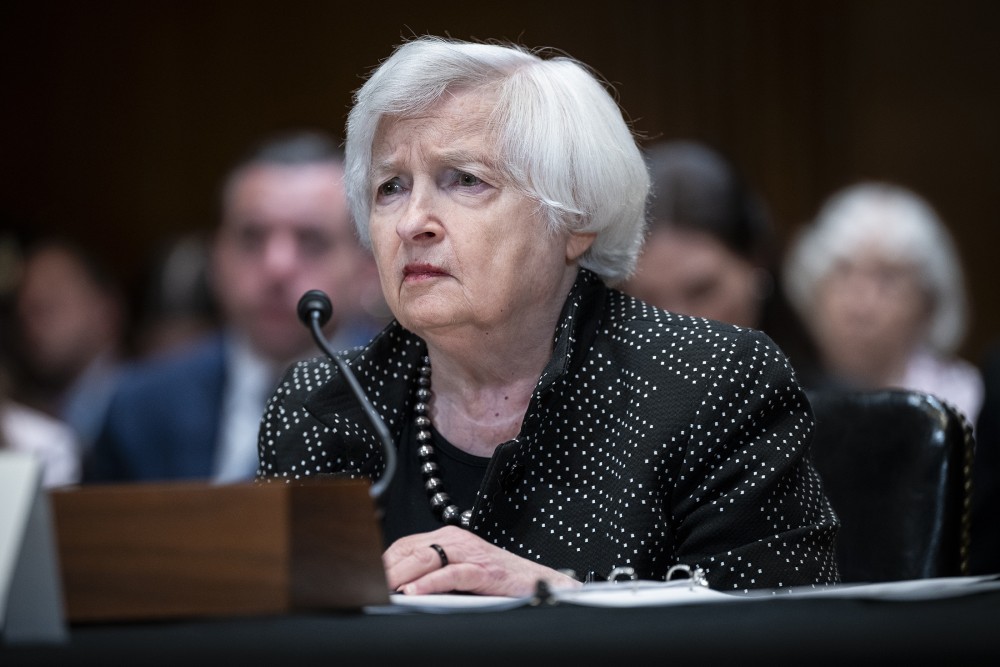
In a detailed correspondence addressed to House Speaker Mike Johnson, Yellen underscored the criticality of swift legislative action. "I respectfully urge Congress to act to protect the full faith and credit of the United States," she wrote, elucidating that the debt ceiling is expected to be breached between January 14 and January 23, though precise timing could vary due to fluctuations in government revenues and expenditures. Yellen’s communication illuminates the narrowing window within which policymakers must act to sustain the government’s fiscal responsibilities.
The debt ceiling functions as a statutory cap on the total amount of debt the federal government can accrue to fulfill existing financial obligations, encompassing everything from Social Security payments to interest on national debt. This perennial issue has long been a source of economic and political contention. Temporarily suspended under the Fiscal Responsibility Act of 2023, the debt ceiling’s suspension is set to expire on January 1, triggering an urgent need for legislative recalibration. Failure to address this limitation risks plunging the nation into default, a contingency that could destabilize global financial markets and erode confidence in the U.S. economy. Historically, the Treasury has utilized extraordinary measures—accounting maneuvers such as suspending investments in certain government trust funds—to buy additional time. However, these are inherently temporary and insufficient substitutes for decisive legislative intervention.
The current predicament follows closely on the heels of a narrowly averted government shutdown, which starkly revealed the extent of partisan divisions in Congress. Efforts spearheaded by President-elect Donald Trump to include provisions addressing the debt ceiling in the year-end spending package were ultimately unsuccessful. Trump had advocated for either raising or abolishing the debt ceiling outright, but resistance within Congress thwarted these initiatives, leaving the issue unresolved as the calendar turns.
The stakes of this impasse are immense. The national debt has reached an alarming $36 trillion, and divergent ideological perspectives exacerbate the challenge of addressing the debt ceiling. Democrats have consistently argued for raising or eliminating the limit, citing the necessity of ensuring the government can honor its financial commitments. Conversely, Republicans have historically opposed such measures, invoking concerns over fiscal responsibility and unsustainable federal spending. In a surprising rhetorical shift, Trump recently expressed support for eliminating the debt ceiling entirely, aligning himself with a position more commonly associated with Democrats. "If [Democrats] want to get rid of it, I would lead the charge," he stated in an interview with NBC News.
Despite Trump’s advocacy, his position has not swayed many within his party. Ultimately, 170 Republicans broke ranks to pass a funding bill that deferred addressing the debt ceiling, effectively delegating the challenge to the incoming administration. This decision has added yet another complex issue to the administration’s already formidable agenda, heightening the stakes for the months ahead.
As the January deadline looms, attention now shifts to Congress’s capacity to navigate this intricate fiscal labyrinth. Should lawmakers fail to reach consensus, the Treasury’s extraordinary measures could extend the operational timeline into 2025, albeit temporarily. This would merely postpone the inevitable, leaving the specter of default and its attendant risks—from disrupted Social Security disbursements to global financial instability—unresolved. The debt ceiling debate transcends mere financial considerations; it encapsulates broader ideological disputes over the size and role of government and the prioritization of fiscal policies.
For Secretary Yellen, the ramifications of inaction are unequivocal. She has consistently articulated the economic devastation a default would precipitate, including elevated borrowing costs, diminished creditworthiness, and cascading impacts on global markets. Her admonitions are a clarion call to Congress, but the polarized political environment renders consensus elusive.
This debate also presents a significant trial for the incoming Trump administration, serving as an early litmus test of its ability to navigate legislative complexities and bridge ideological divides. Trump’s stated willingness to champion the elimination of the debt ceiling could provide a basis for bipartisan dialogue, yet it remains uncertain whether this approach can surmount entrenched partisan resistance.
For the broader public, the implications of this debate are deeply personal. Millions of Americans depend on uninterrupted federal programs, from military salaries to healthcare funding, all of which are jeopardized by the prospect of default. The business community and financial markets, too, are acutely attuned to the potential volatility that prolonged uncertainty could engender.
As the countdown continues, the debt ceiling debate is poised to dominate national discourse in the coming weeks. The ability of Congress to formulate a sustainable solution will be a defining moment, not only for fiscal policy but for the broader trajectory of governance in an era of stark political division. At its core, this debate underscores the imperative of balancing pragmatic decision-making with ideological convictions to safeguard the nation’s economic and financial stability.